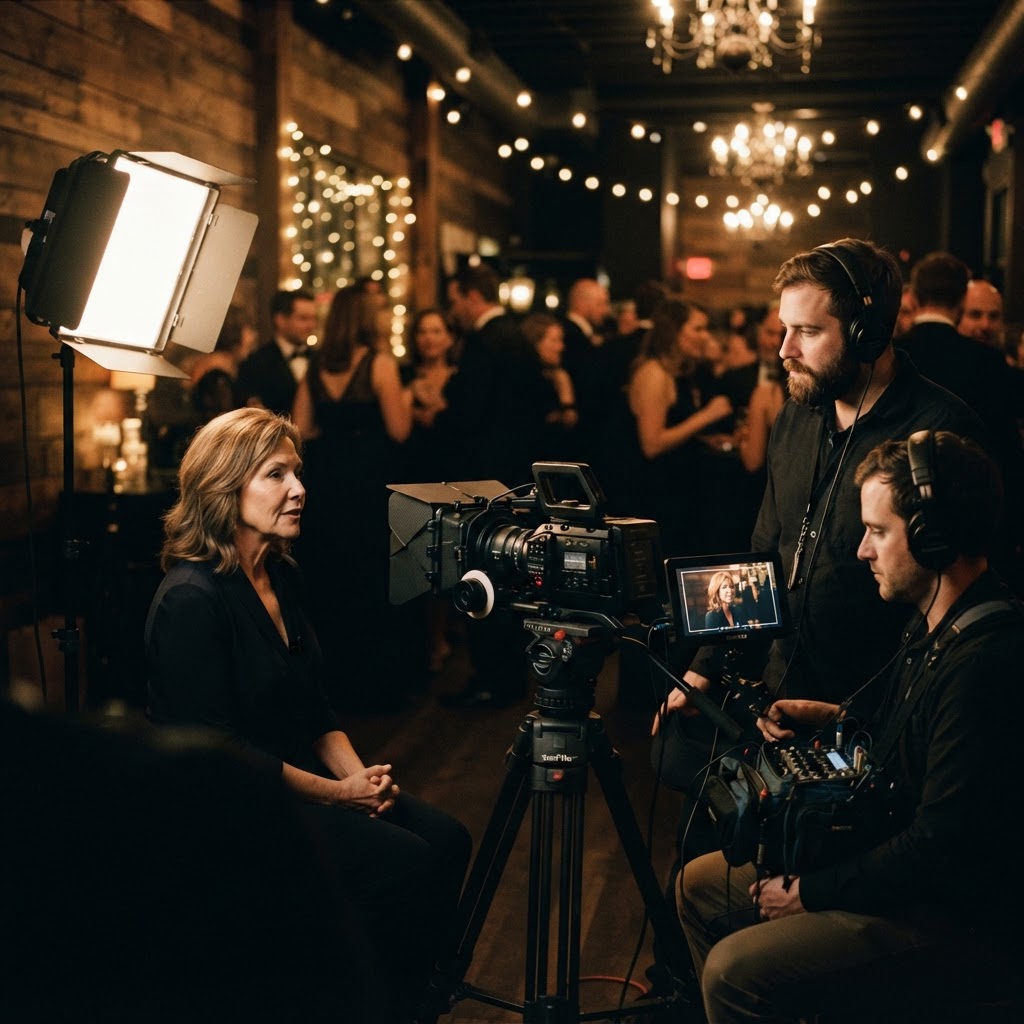
Nonprofit Fundraising Videos
Behind the Scenes of a Successful Gala Fundraising Film: How Powerful Stories Inspire Generosity
An inside look at the production process behind successful gala fundraising films, from strategy and storytelling to interviews, editing, music, and repurposing content beyond the event.
When guests arrive at a fundraising gala, they see the finished product, a polished, emotional film that plays on the big screen before the live appeal. What they do not see is everything that happened behind the scenes to create that moment. A successful fundraising film is not built during editing. It begins weeks, or even months, before anyone presses record. Every interview, every location, every piece of B-roll, and every editing decision is made with one goal in mind: to create a story that inspires people to give. At Brookssmedia, we have partnered with nonprofits across Chicago to produce gala fundraising films that help organizations connect with donors through authentic storytelling. While every nonprofit is unique, the process behind a successful fundraising film follows a proven framework. Here is an inside look at how those films come together.
It Starts With Strategy, Not Cameras
One of the biggest misconceptions about video production is that filming is the most important part of the process. In reality, the most successful fundraising films begin with strategy. Before cameras ever arrive, we work with nonprofit leadership to answer questions such as what the primary fundraising goal is, who will be in the audience, how much the organization hopes to raise, what action viewers should take immediately after the film, and what story best represents the mission. These conversations shape every creative decision that follows. A beautiful film without a clear strategy rarely delivers meaningful fundraising results.
Finding the Right Story
Every nonprofit has dozens of stories. The challenge is not finding one; it is choosing the one that best represents the organization's mission. The strongest gala films typically focus on one individual or one family whose experience reflects a broader impact. Instead of trying to tell every success story, we concentrate on one authentic journey. That single story becomes a window into the organization's larger mission.
Meeting the People Behind the Mission
Before filming begins, we spend time getting to know the people whose stories we will be sharing. This often includes program participants, families, donors, volunteers, executive leadership, frontline staff, and community partners. These conversations help everyone feel comfortable before cameras are introduced. Trust leads to authenticity. Authenticity leads to stronger storytelling.
Planning Every Interview
A common misconception is that great interviews happen by accident. They do not. Every interview begins with thoughtful preparation. Rather than providing scripts, we identify themes we want to explore. Questions often focus on personal experiences, moments of transformation, challenges overcome, lessons learned, and why the mission matters. Our goal is not perfect answers. Our goal is honest conversations.
Capturing the Mission in Action
Interviews tell the audience what happened. B-roll allows them to experience it. During production, we capture real moments such as programs in progress, volunteers serving, staff interacting with participants, community events, educational activities, behind-the-scenes operations, and everyday moments that illustrate impact. These visuals give audiences confidence that the organization's work is genuine and ongoing.
Creating a Comfortable Environment
Many interview subjects have never been on camera before. That is completely normal. One of the most important parts of production is helping people forget the camera is there. We accomplish this by keeping interview crews small, using conversational interview techniques, allowing time between questions, encouraging natural language, and creating a relaxed environment. The less people think about performing, the more authentic they become.
Audio Matters More Than Most People Realize
Beautiful images capture attention. Clear audio creates emotional connection. Professional microphones, thoughtful room selection, and careful monitoring ensure that every meaningful word is heard. Viewers will forgive imperfect visuals. Poor audio immediately distracts from the story. That is why professional sound is one of the most important investments during production.
Building Emotion in the Edit
Editing is where individual moments become a complete story. Rather than arranging interviews chronologically, we organize the film around emotion. A successful fundraising film often follows a simple narrative structure.
The Challenge
What problem exists? Who is affected? Why does it matter?
Hope
How did the nonprofit become involved? What changed? Who made that change possible?
Impact
Show the transformation. Allow viewers to see what success looks like. Celebrate progress while remaining authentic.
Invitation
End by inviting viewers to become part of the story. This is where the fundraising appeal naturally begins.
Music Shapes the Experience
Music is one of the most powerful storytelling tools available. The right soundtrack does not tell viewers how to feel; it supports the emotions already present in the story. Thoughtfully selected music helps create reflection, hope, gratitude, inspiration, and celebration. The best fundraising films never rely on music alone to create emotion. The story always comes first.
Timing the Film for Maximum Impact
Where a film appears during a gala is almost as important as the film itself. Most successful fundraising events position the storytelling film immediately before a live appeal, a paddle raise, a donor challenge, a keynote speaker, or a major announcement. The emotional connection created by the film naturally prepares the audience to take action.
Planning for More Than One Night
A gala film should not disappear after the event ends. One production can support your organization for months, or even years. Repurpose your footage for website homepage videos, annual reports, social media campaigns, grant applications, donor stewardship, volunteer recruitment, email marketing, board presentations, and community outreach. One production day should create an entire library of content.
Common Mistakes That Reduce Impact
Even well-intentioned organizations sometimes weaken their fundraising films by trying to tell too many stories, making the organization the hero instead of the people it serves, using overly scripted interviews, waiting until the last minute to begin production, including too much information, ending without a clear call to action, or forgetting to capture enough supporting B-roll. Keeping the story focused and authentic almost always produces stronger results.
Frequently Asked Questions
When should we begin planning our gala film?
Ideally, production planning should begin two to three months before the event. This provides enough time for strategy, interviews, filming, editing, revisions, and final delivery.
How long should a fundraising gala film be?
Most gala fundraising videos perform best between three and five minutes. Long enough to create emotional investment. Short enough to maintain audience attention.
Who should appear in the film?
The strongest films typically include a combination of program participants, families, donors, volunteers, executive leadership, and staff members. Each perspective helps reinforce the organization's impact.
Can one production support future fundraising campaigns?
Absolutely. Many organizations continue using footage from a single production across multiple fundraising events, annual reports, websites, donor campaigns, and grant presentations.
Why Brookssmedia Takes a Documentary Approach
At Brookssmedia, we believe fundraising films should never feel like commercials. They should feel like conversations. Our documentary-inspired production process focuses on listening before filming, capturing authentic moments instead of staged performances, and creating stories that help audiences connect emotionally with your mission. Because when people feel connected, they become invested. And when they are invested, they are more likely to support your cause, not just once, but for years to come. We have had the privilege of working alongside nonprofit organizations throughout Chicago, helping them create fundraising films that strengthen donor relationships, celebrate community impact, and inspire meaningful generosity.
Ready to Tell Your Mission's Story?
The most successful gala fundraising films do not simply explain what an organization does. They help audiences understand why it matters. If your nonprofit is planning its next gala, capital campaign, or annual fundraising event, Brookssmedia can help you create a documentary-style film that builds trust, inspires generosity, and reflects the heart of your mission. Contact Brookssmedia today to start planning a fundraising film that moves your audience, and your mission, forward.
Have a story worth telling?
Let's shape the strategic narrative behind your next film.
Book a Discovery Call