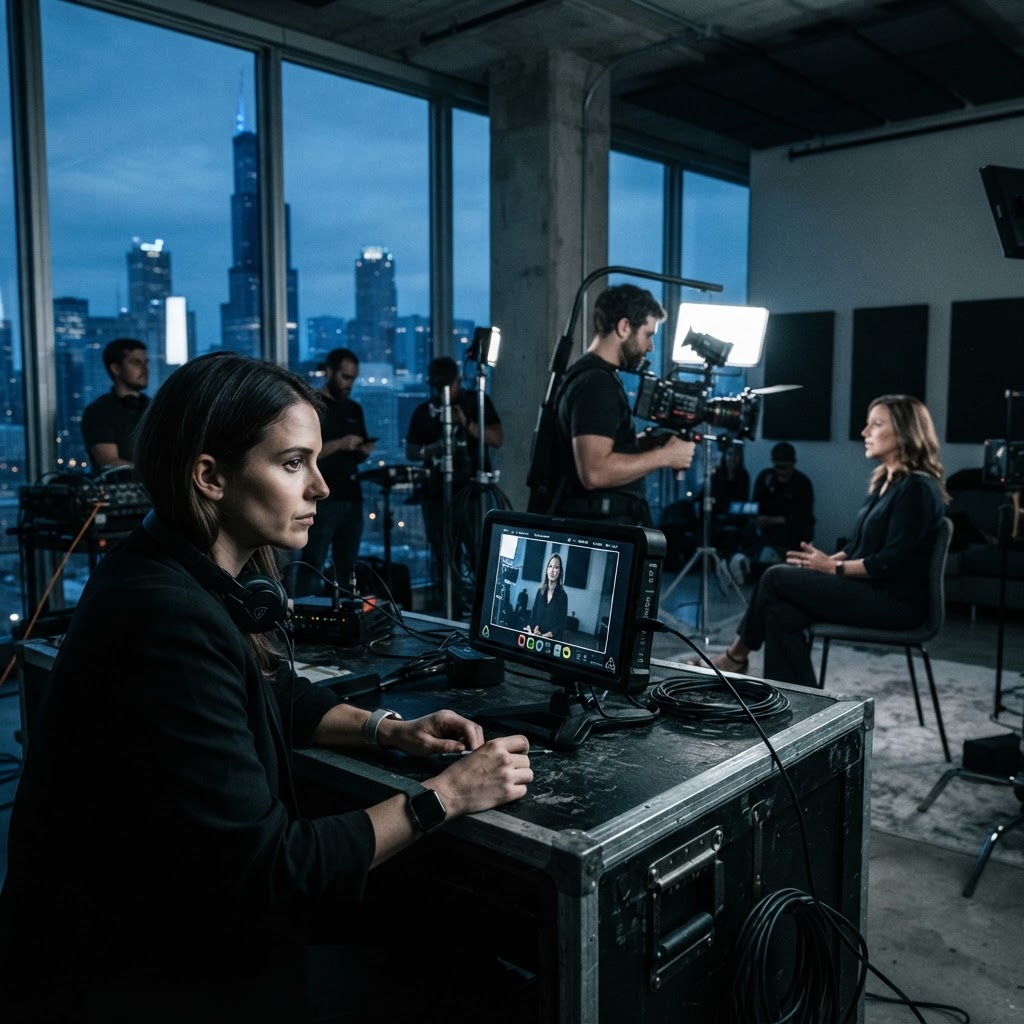
Chicago Videographer
Chicago Video Production Trends for 2026
Twelve video production trends shaping Chicago in 2026, from authentic storytelling and AI support to vertical video, content libraries, recruiting, accessibility, and measuring success beyond views.
Video production in Chicago is changing quickly. Businesses and nonprofits are no longer creating one polished video and using it for several years. They need flexible content libraries that can support websites, social media, fundraising campaigns, recruiting, sales, events, and internal communication. At the same time, artificial intelligence is accelerating production, vertical video is expanding beyond entertainment platforms, and audiences are becoming more cautious about content that feels overly scripted or artificial. For Chicago organizations planning video projects in 2026, the strongest strategy is not simply following every new trend. It is understanding which changes can help you communicate more clearly, build trust, and create greater long-term value from each production.
1. Authentic Storytelling Is Becoming More Valuable
As AI-generated content becomes more common, authentic human stories are becoming easier to recognize and more valuable. Audiences want to hear from real employees, customers, donors, volunteers, community members, organizational leaders, and people directly affected by the work. Highly polished videos can still perform well, but polish alone is no longer enough. The strongest videos combine professional production quality with honest conversations, natural environments, and believable emotion. This is especially important for Chicago nonprofits, healthcare organizations, universities, corporations, and community-focused brands. In 2026, credibility is becoming part of the creative strategy.
2. AI Will Support Production, Not Replace Strategy
Artificial intelligence is changing how production teams organize footage, create transcripts, generate captions, remove background noise, review interviews, and develop early concepts. AI can make certain parts of production faster. However, it cannot automatically understand which story your audience needs to hear, when an interview subject is becoming uncomfortable, which emotional moment matters most, how your organization should be represented, whether a story is ethical and respectful, or what will inspire a donor, employee, or customer to act. Human judgment remains essential. The most effective Chicago video production companies will use AI to improve efficiency while continuing to rely on experienced producers, directors, interviewers, and editors for strategy and storytelling.
3. One Production Will Create an Entire Content Library
Organizations are moving away from single-video projects. Instead, they are planning productions that create multiple pieces of content from the same filming days. A corporate interview production might generate a primary brand film, executive leadership clips, employee testimonials, recruiting videos, website content, LinkedIn videos, vertical social clips, and internal communication assets. A nonprofit production might create a gala fundraising film, participant stories, donor testimonials, sponsor videos, volunteer recruitment clips, social media content, website videos, and grant-support materials. This approach increases the return on production spending because every interview and filming day serves several communication goals.
4. Vertical Video Will Become a Standard Deliverable
Vertical video is no longer limited to TikTok or Instagram. LinkedIn officially supports vertical video ratios, including 4:5 and 9:16, as part of its professional video advertising options. Organizations should expect vertical versions to become a normal part of production packages. That does not mean every project should be filmed only vertically. Instead, production teams should plan compositions that can work across 16:9 horizontal, 9:16 vertical, 4:5 social, and 1:1 square formats. Planning for multiple formats before filming creates stronger results than attempting to crop every video afterward.
5. Short-Form and Long-Form Video Will Work Together
Short-form video is excellent for discovery. Long-form video is better suited for deeper storytelling, education, fundraising, thought leadership, and building trust. The smartest strategies use both. A Chicago company might produce a four-minute customer story and then create several 30-second clips that lead audiences back to the full video. A nonprofit might produce a gala film and repurpose it into short participant stories, donor quotes, and mission-focused social content. The goal is not to choose between short and long videos. It is to give each format a specific job.
6. Executive Thought Leadership Will Continue Growing
Business leaders are increasingly expected to be visible. Potential clients, employees, partners, and investors want to hear directly from the people leading an organization. Executive video content can include industry insights, company updates, leadership perspectives, answers to customer questions, commentary on market changes, behind-the-scenes decision-making, and organizational values. Chicago companies can use recurring executive video sessions to create months of professional content in a single production day.
7. Documentary-Style Corporate Video Will Expand
Traditional corporate videos often rely on scripts, staged scenes, and formal narration. In 2026, more organizations are choosing a documentary-inspired approach. This style may include real interviews, employees working naturally, customer experiences, behind-the-scenes operations, community impact, unscripted moments, and authentic environments. Documentary storytelling can make a company feel more relatable without sacrificing production quality. It is particularly effective for organizations that need to communicate trust, culture, impact, or purpose.
8. Video Will Become More Important for Recruiting
Candidates want to understand what working for a company actually feels like. Written job descriptions cannot always communicate workplace culture, leadership style, employee relationships, career growth, work environments, and company values. Recruiting videos allow potential employees to hear directly from current team members. Chicago employers competing for talent can use employee stories, workplace tours, departmental videos, and day-in-the-life content to provide a more realistic view of the organization. The strongest recruiting videos feel honest rather than overly promotional.
9. Videos Must Work Without Sound
Many viewers first encounter video while scrolling silently. That makes captions, on-screen messaging, visual clarity, and strong opening images increasingly important. A video should still communicate its basic message when muted. Organizations should plan for accurate captions, clear titles, on-screen names, short text callouts, visually understandable scenes, and strong opening moments. Audio still matters tremendously for interviews and emotional storytelling. However, the edit must also respect how audiences discover content on mobile devices.
10. Chicago Locations Will Become Part of the Story
Chicago provides more than a recognizable skyline. Its neighborhoods, architecture, industrial spaces, lakefront, offices, universities, cultural institutions, and community organizations can help communicate identity. A financial company in the Loop should not necessarily look like a neighborhood nonprofit on the South Side. A manufacturing story may benefit from an active facility, while an executive interview may require a quiet office with strong architectural character. In 2026, organizations should choose locations based on what those environments communicate, not simply because they look impressive.
11. Accessibility Will Be Planned Earlier
Accessibility should not be added at the end of production. Organizations are increasingly planning for captions, transcripts, readable on-screen text, clear audio, high visual contrast, language versions, and audio description when appropriate. Accessible content helps more people engage with the message and makes videos easier to use across websites, social media, presentations, and internal platforms.
12. Success Will Be Measured Beyond Views
View counts can be useful, but they do not automatically prove that a video is working. Organizations are placing greater attention on metrics connected to actual goals. These may include donation conversions, qualified leads, job applications, event registrations, website engagement, sponsor inquiries, sales conversations, volunteer applications, audience retention, and content reuse. A fundraising film with 1,000 highly relevant viewers may create more value than a short video with 100,000 passive views. Video strategy should begin with the action the audience should take.
How Chicago Organizations Should Prepare
Before beginning a video project in 2026, organizations should answer who they are trying to reach, what viewers should understand or feel, what action they should take, which platforms will receive the content, how many deliverables can be created, which stories will build the most trust, and how success will be measured. These answers should influence the production plan, interview strategy, filming format, crew size, editing approach, and distribution plan.
Frequently Asked Questions
Is short-form video replacing traditional corporate video?
No. Short-form content is valuable for discovery and frequent communication, while longer videos remain useful for storytelling, education, fundraising, recruiting, and customer trust.
Should Chicago businesses use AI-generated video?
AI can support editing, captions, planning, and repetitive production tasks. Organizations should be cautious about replacing real customer, employee, donor, or community stories with synthetic content when trust and authenticity are important.
Should every production include vertical video?
Most organizations should at least consider vertical deliverables when content will appear on LinkedIn, Instagram, YouTube Shorts, Facebook, or TikTok.
What type of video offers the greatest value?
Projects designed to create several useful deliverables usually provide the strongest long-term value. The best format depends on the organization's audience and goals.
Brookssmedia's Approach to Video Production in 2026
Brookssmedia is a Chicago video production company specializing in documentary-inspired storytelling for corporations, nonprofits, agencies, and mission-driven organizations. We create corporate brand films, nonprofit fundraising videos, executive interviews, event coverage, customer testimonials, recruiting videos, documentary-style campaigns, and social media content. Our process begins with three questions: what is the problem, why should the audience care, and what is the solution. From there, we build a production strategy that combines authentic interviews, cinematic visuals, professional audio, purposeful editing, and multiple deliverables. Technology will continue changing. The importance of a meaningful story will not.
Build a Video Strategy for What Comes Next
The strongest Chicago video strategies for 2026 will combine new technology with authentic human storytelling. Organizations should create content that is flexible enough for multiple platforms, honest enough to build trust, and strategic enough to support measurable goals. Contact Brookssmedia today to plan a Chicago video production that creates authentic stories, versatile content, and long-term value for your organization.
Have a story worth telling?
Let's shape the strategic narrative behind your next film.
Book a Discovery Call