Executive Video Production
How to Prepare Your CEO for an On-Camera Interview: A Complete Guide for Confident, Authentic Leadership Videos
A complete guide to preparing your CEO for an on-camera interview, from defining key messages and telling authentic stories to wardrobe, pacing, and working with the right interviewer.
When a CEO appears on camera, they are doing more than representing the company; they are representing its vision, culture, and credibility. Whether the video is for your website, LinkedIn, an annual report, a fundraising campaign, investor relations, or an internal announcement, viewers form an opinion about your organization within seconds. A confident, authentic interview can build trust, while an unprepared one can unintentionally undermine your message.
The good news? Great on-camera interviews are not about having a television personality. They are about preparation. At Brookssmedia, we have interviewed executives, nonprofit leaders, physicians, educators, and business owners throughout Chicago. We have found that the most successful interviews are not memorized; they are thoughtfully prepared and naturally delivered.
This guide will help your CEO walk into filming day feeling confident, relaxed, and ready to tell your organization's story.
Why CEO Interviews Matter
People connect with people, not logos. A well-produced executive interview allows audiences to meet the person behind the organization, understand your company's mission, build confidence in your leadership, hear your values directly from decision-makers, and connect emotionally with your brand. For many potential clients, employees, investors, and donors, your CEO may be the first face they associate with your company.
Step 1: Start With the Message, Not the Script
One of the biggest mistakes companies make is scripting every sentence. While it may seem safer, heavily scripted interviews often sound robotic and disconnected. Instead, define three to five key messages your CEO should communicate. For example, why your company exists, the problem you solve, what makes your organization different, your commitment to customers, and your vision for the future.
Think of these as conversation points rather than lines to memorize. When executives understand the message instead of memorizing words, they appear more authentic and confident.
Step 2: Know Who You Are Speaking To
Every interview should have one primary audience. Ask yourself whether you are speaking to potential customers, future employees, investors, community partners, donors, or existing clients. Understanding your audience changes everything, from tone and vocabulary to the stories you choose to tell.
For example, a recruiting video should emphasize culture, opportunity, and growth. An investor update should focus on strategy, vision, and measurable progress. A nonprofit fundraising video should lead with impact and human stories.
Step 3: Share Stories Instead of Statistics
Facts inform. Stories inspire. Instead of saying customer satisfaction increased by 18 percent, tell the story behind that improvement. Describe a customer challenge, explain how your team responded, and share the outcome. People remember stories far longer than percentages. Whenever possible, answer questions with real examples that illustrate your company's values in action.
Step 4: Practice Talking, Not Memorizing
Many executives worry about saying the perfect thing. Ironically, that pressure often makes interviews sound less natural. Instead of rehearsing exact wording, practice explaining ideas. If your CEO can comfortably discuss each topic in conversation, the interview will feel far more genuine. Remember that authenticity builds trust, and perfection rarely does.
Step 5: Dress for Your Brand
Clothing communicates before a single word is spoken. Choose attire that reflects both your organization and your audience. Professional tips include wearing solid colors instead of busy patterns, avoiding bright white if possible, limiting large logos unless they serve a branding purpose, keeping jewelry simple and minimal, and choosing clothing that feels comfortable for sitting and moving naturally. Most importantly, dress like yourself on your best professional day. Authenticity always photographs better than trying to become someone else.
Step 6: Focus on Conversation, Not the Camera
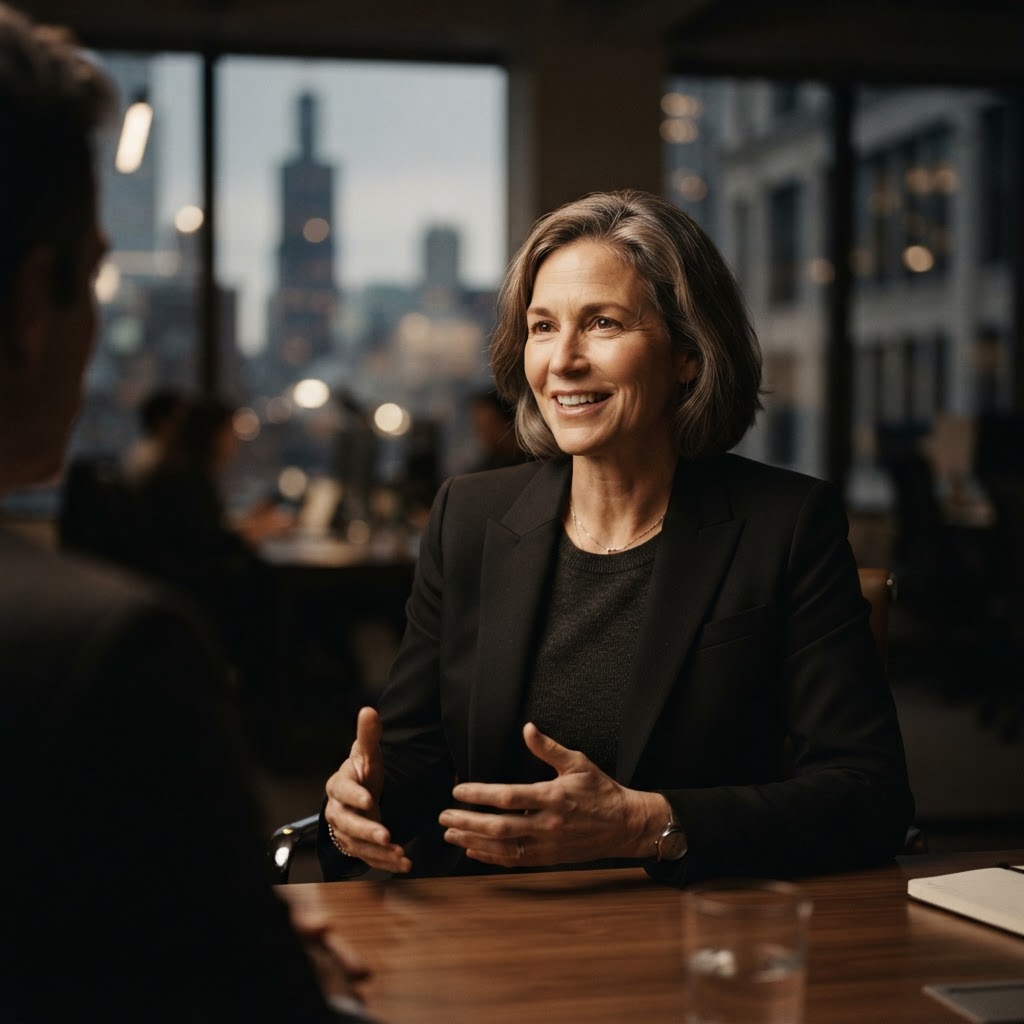
Many executives worry about looking directly into the camera. For most documentary-style interviews, they should not. Instead, speak naturally with the interviewer. Treat the interview like an engaging conversation rather than a presentation. When leaders focus on the person asking the questions instead of the camera, their expressions become more relaxed, genuine, and approachable.
Step 7: Slow Down
Nerves often cause people to speak faster than normal. Take your time, pause between thoughts, and allow yourself to breathe. A slower pace communicates confidence and gives editors more flexibility during post-production. Remember that silence is not your enemy. Editors love natural pauses because they create clean opportunities for seamless edits.
Step 8: Do Not Worry About Mistakes
One of the biggest misconceptions about professional interviews is that everything must be perfect in one take. It does not. Professional interviews are edited. If you lose your train of thought, pause, smile, take a breath, and start the sentence again. No one expects perfection. The goal is authenticity.
Step 9: Let Personality Show
The best executive interviews do not sound like corporate press releases. They sound like real people. It is okay to smile, laugh naturally, share personal experiences, tell stories, and show enthusiasm. People want to work with people they trust, and personality helps build that trust.
Step 10: Work With an Interviewer Who Knows How to Guide the Conversation
A great interviewer does not simply ask questions. They help executives discover better answers. Experienced interviewers know how to ask meaningful follow-up questions, put nervous speakers at ease, find authentic moments, draw out compelling stories, keep conversations focused, and adapt when unexpected opportunities arise. The quality of the interview often depends as much on the person asking the questions as the person answering them.
What Happens Before Filming?
A professional production team should guide your CEO through every step of the process. Typical preparation includes a discovery meeting, message development, interview planning, location selection, wardrobe recommendations, lighting setup, audio testing, camera positioning, and interview coaching. When preparation is handled properly, filming day becomes surprisingly relaxed.
What Happens During the Interview?
At Brookssmedia, our interview process is designed to feel like a conversation, not an interrogation. We focus on creating a comfortable environment where executives can speak naturally. Rather than rushing through a checklist of questions, we guide the conversation, allowing authentic moments to emerge. Those unscripted moments often become the most memorable parts of the final film.
Common Questions CEOs Ask Before Filming
What if I get nervous?
That is completely normal. Even experienced executives feel nervous before interviews. A skilled production team will help you settle in, adjust to the environment, and build confidence before recording begins.
Do I need to memorize anything?
No. Understanding your key messages is much more effective than memorizing a script.
How long will the interview take?
Most executive interviews last between 30 and 90 minutes, depending on the project. The final edited interview may only use a few minutes of footage, but taking time allows for thoughtful, authentic responses.
Can mistakes be edited out?
Yes. Professional editing removes pauses, repeated phrases, stumbles, and unnecessary sections while preserving the natural flow of the conversation.
Should I look at the interviewer or the camera?
In most documentary-style interviews, you will speak directly with the interviewer. This creates a more natural and engaging viewing experience.
Why Preparation Makes All the Difference
The strongest executive interviews do not happen because someone is naturally gifted on camera. They happen because the production process is designed to help leaders succeed. With thoughtful preparation, clear messaging, and an experienced production partner, even first-time interview subjects can deliver authentic, compelling interviews that strengthen their organization's brand.
Why Organizations Trust Brookssmedia
At Brookssmedia, we specialize in helping leaders feel comfortable on camera. From Fortune 500 executives and nonprofit leaders to physicians, educators, and entrepreneurs, we have guided professionals through interviews that feel genuine, conversational, and impactful. Our documentary-inspired approach focuses on authenticity over perfection, helping organizations communicate with clarity while building trust with the audiences that matter most.
Whether you are creating a corporate brand film, executive profile, annual report video, fundraising campaign, or recruiting film, we help transform interviews into stories that connect.
Ready to Showcase Your Leadership?
A great CEO interview does not happen by chance; it happens through thoughtful preparation, experienced guidance, and strategic storytelling. If you are planning a corporate video in Chicago, Brookssmedia can help your leadership team feel confident on camera and create a video that reflects the professionalism and vision of your organization. Contact Brookssmedia today to schedule a discovery call and start planning your next executive interview.
Have a story worth telling?
Let's shape the strategic narrative behind your next film.
Book a Discovery Call