Chicago Videographer
Questions to Ask Before Hiring a Videographer
Thirty essential questions to ask before hiring a videographer, covering strategy, storytelling, interviews, audio, pricing, crew, licensing, ownership, and how to compare proposals with confidence.
Hiring a videographer can feel overwhelming. A search for video production services may bring up freelancers, camera operators, content creators, wedding filmmakers, event videographers, creative agencies, and full-service production companies. Their portfolios may all look professional, but their services, processes, experience, and pricing can be very different. Choosing the right videographer requires more than comparing highlight reels or asking who owns the best camera. You need to know whether the person or team understands your goals, can manage the production professionally, and has a clear plan for turning your investment into content that delivers lasting value.
1. What Types of Video Projects Do You Specialize In?
Not every videographer specializes in the same kind of work. One may focus on weddings, while another specializes in corporate interviews, nonprofit fundraising films, live events, commercials, or social media content. Relevant experience matters because every type of production requires a different approach. A videographer who excels at cinematic weddings may not have experience directing a CEO or interviewing a nonprofit participant about a sensitive experience.
2. Have You Worked With Organizations Like Ours?
Industry experience is not always required, but it can reduce the learning curve. A team that has worked with nonprofits may already understand donor engagement, sensitive interviews, and gala deadlines. A team experienced in corporate production may be familiar with executive schedules, brand guidelines, and multi-location filming. Pay attention to whether the company has solved a similar communication challenge.
3. How Will You Learn About Our Organization?
Your videographer should not arrive on filming day knowing only your company name and address. A strong process begins with discovery. Ask how the team will learn about your organization, audience, goals, brand voice, key messages, and the platforms where the video will appear. If there is no meaningful discovery process, the finished video may look attractive but lack strategic direction.
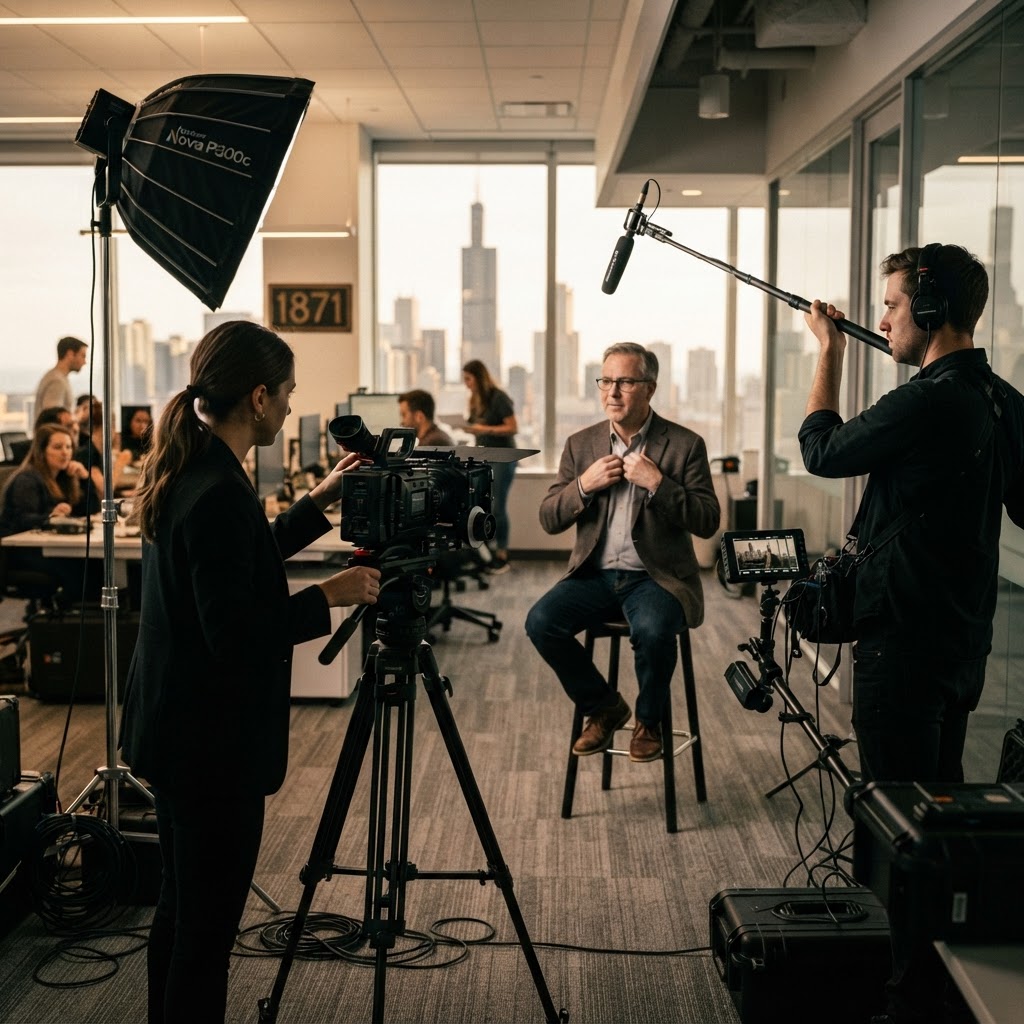
4. What Is Your Pre-Production Process?
Pre-production is the planning stage before cameras begin recording. It may include creative development, story planning, interview preparation, scheduling, location scouting, shot lists, crew planning, equipment selection, release forms, and deliverable planning. Strong pre-production helps avoid delays, missing footage, confusing interviews, and unnecessary reshoots.
5. Who Will Develop the Story?
A camera captures footage. A story gives that footage meaning. Ask who will determine the central message, narrative structure, interview themes, featured participants, emotional direction, and call to action. Some videographers expect clients to provide a completed script. Others offer producing, creative direction, and documentary-style story development. Understand what you are hiring.
6. Who Will Conduct the Interviews?
This is one of the most important questions for corporate, nonprofit, and testimonial videos. The interviewer must know how to help participants feel comfortable, ask open-ended questions, listen carefully, ask natural follow-up questions, encourage complete responses, and handle sensitive conversations. Review previous interview-driven work and listen closely to how natural the participants sound.
7. How Do You Help Nervous People Feel Comfortable on Camera?
Many people featured in corporate and nonprofit videos are not professional performers. An experienced videographer should have a process for helping participants relax, such as explaining the setup, beginning with easy conversational questions, allowing multiple attempts, maintaining eye contact, keeping the crew small, and giving participants time to think. The goal should be to capture a believable person, not force a perfect performance.
8. What Is Included in Your Estimate?
A production estimate should clearly explain what you are receiving. Ask whether the quoted price includes discovery, pre-production, filming hours, crew, cameras, lighting, audio, drone footage, travel, editing, color correction, sound mixing, music licensing, motion graphics, captions, revision rounds, social media versions, and raw footage. Two proposals with similar prices may offer very different levels of service.
9. Are There Any Potential Additional Costs?
Unexpected fees can create frustration later. Ask which circumstances may increase the project cost, such as additional filming hours, overtime, extra production days, travel, parking, location fees, permits, talent, makeup artists, teleprompters, additional revisions, complex animation, rush delivery, and extra video versions. A professional videographer should explain these possibilities before the project begins.
10. How Many Crew Members Will Be Present?
The appropriate crew size depends on the project. A simple interview may need only one or two professionals. A fundraising film, conference, or multi-camera event may require a larger team including a producer, director, camera operators, audio technician, and lighting technician. A single videographer may struggle to simultaneously manage multiple cameras, lighting, sound, directing, and interviews. The crew should match the complexity of the production.
11. What Cameras and Equipment Will You Use?
Equipment should not be the main reason you hire someone, but the videographer should have tools appropriate for the project. Ask about camera systems, lenses, lighting, microphones, audio recorders, stabilization, teleprompters, drones, and backup equipment. The best videographer is the person who knows how to use the right equipment to serve the story.
12. How Will You Record and Protect the Audio?
Poor audio can make excellent visuals unusable. Ask how interviews, speeches, panels, and live events will be recorded. Professional options may include wireless lavalier microphones, boom microphones, field recorders, direct soundboard feeds, on-camera backup audio, and live monitoring through headphones. There should be a backup plan for important interviews and speeches.
13. Do You Carry Production Insurance?
Professional videographers should generally carry appropriate business and production insurance. Venues, corporations, universities, hospitals, and government facilities may require a certificate of insurance before filming. Ask whether the provider carries general liability insurance, equipment coverage, and workers' compensation when applicable.
14. Do You Have Backup Equipment?
Equipment can fail. Cameras may overheat. Memory cards can become corrupted. Batteries may stop working. Ask whether the team brings backup cameras, memory cards, batteries, microphones, audio recorders, and cables. Important events and interviews often cannot be recreated. A professional videographer should prepare for technical problems.
15. How Do You Back Up the Footage?
Ask what happens to your footage after filming. A professional workflow may include recording to multiple memory cards, creating duplicate backups after production, storing footage on separate drives, and retaining final exports for an agreed period. Ask how long raw footage and completed projects will be stored, since long-term storage may require an additional fee.
16. How Many Revision Rounds Are Included?
Most professional projects include a limited number of revision rounds. Ask how many rounds are included, what counts as one revision round, how feedback will be submitted, and what happens if additional revisions are needed. Select one person from your organization to collect and consolidate feedback, since conflicting notes from multiple stakeholders can delay delivery and increase editing costs.
17. What Is the Expected Production Timeline?
Ask for a realistic schedule covering discovery, pre-production, filming, first draft, client review, revisions, and final delivery. The timeline should account for your approval process. For galas, conferences, and product launches, build in time to test the final video before the event.
18. How Will the Final Videos Be Delivered?
Ask which formats and resolutions you will receive. Depending on the project, you may need a 4K master file, a 1080p version, a website-optimized version, vertical social media video, square social media video, a captioned version, and a presentation-ready file. Also ask whether the team will provide recommendations for uploading, compression, and platform use.
19. Is Licensed Music Included?
Music used in a professional video must be properly licensed. Using unlicensed commercial songs can lead to muted social media posts, copyright claims, removed videos, and legal concerns. Ask whether music licensing is included and what usage the license permits. A music license for an organic website video may not automatically cover television, paid advertising, or national campaigns.
20. Will Our Videos Include Captions?
Captions improve accessibility and are essential for viewers watching without sound. Ask whether the project includes open captions burned into the video, closed-caption files, transcripts, and multiple language captions. Captioning also makes it easier to repurpose interview content for articles, blogs, and other digital materials.
21. Who Owns the Finished Video?
Ownership and usage rights should be explained in the contract. Ask who owns the final video, raw footage, project files, graphics, photography, stock footage, and music licenses. Also ask whether the videographer may use the finished work in a portfolio or promotional materials. Do not assume that payment automatically transfers every asset or right.
22. Will We Receive the Raw Footage?
Raw footage is not always included. Some production companies provide it automatically. Others charge for preparation, transfer, storage drives, or expanded usage rights. Before requesting raw footage, understand what it contains, since raw files may require professional editing software, use large amounts of storage, need color correction, and include multiple takes.
23. Can the Footage Be Repurposed Into Multiple Videos?
One production can often create an entire content library. Ask whether the videographer can deliver a primary brand film, social media clips, executive soundbites, testimonials, recruiting videos, sponsor videos, vertical edits, and behind-the-scenes content. Planning multiple deliverables before production is more efficient than requesting them after the shoot.
24. How Will You Prepare for the Filming Location?
Chicago productions can present logistical challenges related to parking, loading, elevators, building security, public permits, weather, street noise, construction, electrical access, and venue restrictions. Ask whether the videographer will scout the location or participate in a technical walkthrough. The team should collect enough information to plan equipment access, lighting, sound, and scheduling.
25. Do You Handle Permits and Releases?
Depending on the project, you may need location releases, appearance releases, property permissions, city permits, drone authorizations, music licenses, and stock footage licenses. Ask which party is responsible for obtaining and organizing these documents. For nonprofits, healthcare organizations, and sensitive community projects, participant releases and privacy requirements should be discussed carefully.
26. How Do You Handle Sensitive Interviews?
Some productions involve personal stories related to health, trauma, financial hardship, or family challenges. Ask how the production team protects interview participants. A thoughtful process may include clear informed consent, advance discussion of sensitive topics, respectful interview language, allowing participants to pause, and protecting confidential information. The story should never become more important than the person sharing it.
27. How Do You Measure Whether the Video Was Successful?
Success should be connected to your original goal. Ask how the videographer thinks about results. Potential measurements include donations, website conversions, audience retention, event registrations, recruiting applications, sales inquiries, sponsor interest, and social engagement. A production partner should understand what the video is intended to accomplish.
28. Can You Provide References or Client Testimonials?
A portfolio shows the finished work. References reveal the client experience. Ask previous clients about communication, reliability, organization, professionalism, interview skills, responsiveness, problem-solving, deadline management, and overall value. A beautiful reel means less when the production process was disorganized or difficult.
29. What Do You Need From Our Team?
Video production is a collaboration. Your organization may need to provide a primary contact, access to leadership, interview participants, brand guidelines, logos, location access, internal approvals, existing photography, program schedules, legal guidance, and consolidated feedback. Ask for these expectations early so your team can plan its responsibilities.
30. Why Are You the Right Partner for This Project?
This final question gives the videographer an opportunity to connect experience, process, and creative approach to your specific needs. Listen for an answer based on your goals, your audience, your story, relevant experience, and production strategy. Be cautious when the answer focuses only on cameras, awards, or visual style.
Warning Signs to Watch For
Consider looking elsewhere when a videographer provides a quote without discussing your goals, has no written contract, cannot explain what is included, avoids questions about licensing, uses unlicensed music, offers no revision process, has no backup equipment, produces inconsistent audio quality, promises an unrealistic turnaround, pressures you to decide immediately, or focuses entirely on cameras. Professionalism should be visible before filming begins.
How to Compare Videographer Proposals
Do not compare proposals by total cost alone. Create a simple checklist that includes strategy, pre-production, story development, crew size, production time, equipment, audio, editing, deliverables, revisions, licensing, captions, ownership, insurance, and timeline. A lower quote may exclude services that are essential to the success of your project. Choose the proposal that offers the strongest combination of experience, clarity, process, and value.
Frequently Asked Questions
How much should a professional videographer cost?
Pricing depends on the project's scope, crew size, filming time, equipment, editing, travel, locations, and number of deliverables. A basic interview may cost less than a multi-day corporate campaign, documentary-style fundraising film, or multi-camera conference production. Request a detailed proposal rather than relying on a generic hourly rate.
Should I hire a freelancer or a production company?
A freelancer may be appropriate for a smaller or straightforward project. A production company may be better for projects requiring strategy, producing, interviews, multiple crew members, multi-camera coverage, several locations, or numerous deliverables. Choose based on the project's complexity rather than the provider's title.
How far in advance should I hire a videographer?
Begin six to eight weeks before most productions when possible. Fundraising films, conferences, commercials, and multi-location projects may require several months of planning.
Is the cheapest videographer a bad choice?
Not necessarily. However, make sure the quote includes everything required to complete the project successfully. A low initial estimate can become expensive when important services, revisions, licensing, audio, or additional deliverables are added later.
Should I ask for raw footage?
Request raw footage when your organization has a realistic plan for using, editing, storing, and managing it. Clarify the cost, format, ownership, and whether project files are included.
Why Clients Choose Brookssmedia
Brookssmedia is a Chicago video production company specializing in documentary-inspired storytelling for nonprofits, corporations, agencies, and mission-driven organizations. Our services include corporate brand films, fundraising videos, executive interviews, event coverage, customer testimonials, recruiting videos, documentary-style campaigns, and multi-camera productions. We begin each project by understanding three essential questions: what is the problem, why should the audience care, and what is the solution. Our process combines strategy, authentic interviews, professional audio, cinematic imagery, and purposeful editing to create content that continues working long after production ends.
Ask Better Questions Before Making Your Decision
Hiring a videographer should not be based entirely on price, equipment, or a short highlight reel. Ask questions that reveal how the person or company approaches strategy, storytelling, interviews, logistics, audio, editing, licensing, ownership, collaboration, and long-term value. The right videographer should make you feel confident not only about the finished video, but also about the process required to create it.
Ready to Discuss Your Video Project?
Whether you are producing a corporate brand film, nonprofit fundraising video, executive interview, event recap, or documentary-style campaign, Brookssmedia can help you plan a production around your audience, goals, and story. Contact Brookssmedia today to schedule a consultation and learn how strategic video production can help your organization communicate with greater clarity, authenticity, and impact.
Have a story worth telling?
Let's shape the strategic narrative behind your next film.
Book a Discovery Call